Engineering Upward
There is something to be said for engineering in and of itself. It is not that it is good. It is not that it is bad either.
Engineering is closer to science in that it can be used in many directions, but it differs from science in its aim: it is not after base-truths, it is after a result to an arbitrary objective. It satisfies practical needs. In that sense, it is more “Nietzschian”: it dispenses with any notion of truth-unified reality, replacing the pursuit of truth with the pursuit of capability.
There is also a specific archetype of the Engineer. It relates to the Ego and to playing God in a way, but it is certainly true that the world has moved to become a better place owing to our existance. It has also moved counter-positively, though. I attempt to justify and align myself with engineering in this text.
Engineering provides tools, free of value, that nonetheless make life, if nothing else, easier for those who own them. Aristotilian techne is exactly this. In fact, the word technology (the product of Engineering) emerges from this exact term.
I own a phone so that I can communicate with people more easily. I own a computer so that I can produce more value in work to myself and others. I own a car so that I can fill my life with more things that move me towards where I want to be.
In my case I can affirm with certainty that my tools are attempting to do good to the extent that I myself am trying to do good. This essay is an example of that.
Engineering allows people to get around a lot more easily. Jeremy Clarkson of all people described this virtue clearly in an oddly serious commentary about the Porsche 928. Its quickness and predictability at high speeds allowed him to be with his father in his last moments.
On the other hand, there were many conceptions that came from engineers that allowed the Nazis to practice their evils.
So the question is not whether engineering “has” values. It is whether we can aim engineering toward what we would recognize as higher values—without losing the power that makes it engineering.
The question I’m looking to answer is something akin to the following:
Is there a way to produce engineering in the direction of Good, Beauty, Unification, Intelligibility?
Reality seems to have a personality (Chris Langan), and it is to the extent that you satisfy it that you survive the test of time. It has a personality in the sense that it lets a certain set of things live on for not so obvious reasons.
You satisfy reality’s personality through art and expression (although good behaviour seems to have a piece in this puzzle too), just like you satisfy a tyrant with cleanliness, symmetry, square corners (see Português Suave). The Cosmos (origin of cosmetics) or the Universe (meaning from many, one) seems to appreciate authenticity, beauty, unification—it’s pre-supposed in the name afterall.
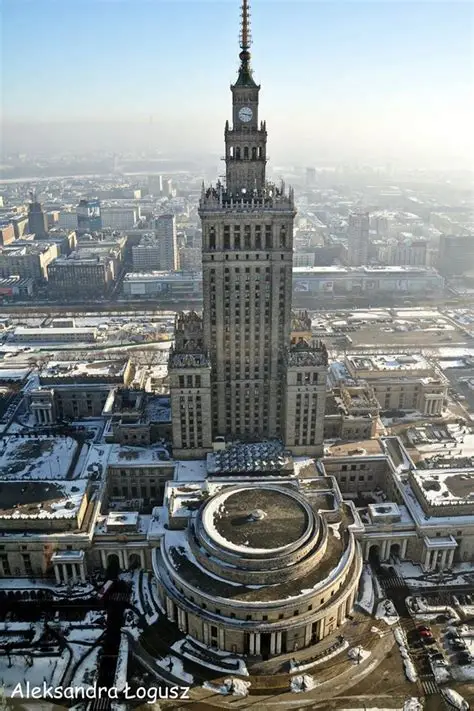
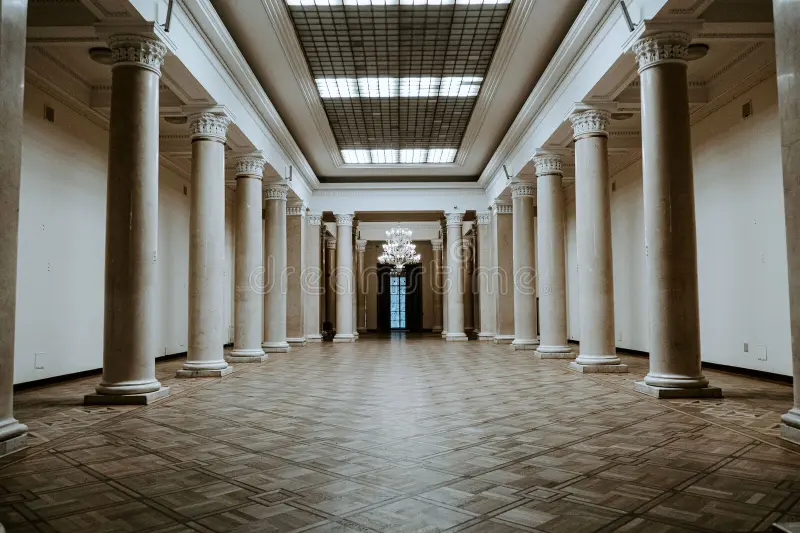
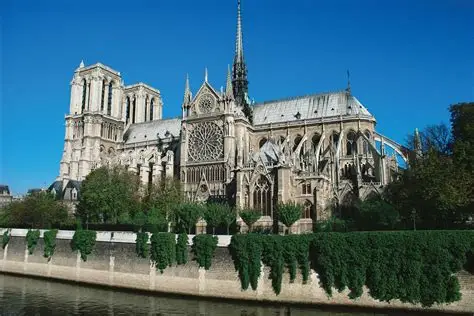
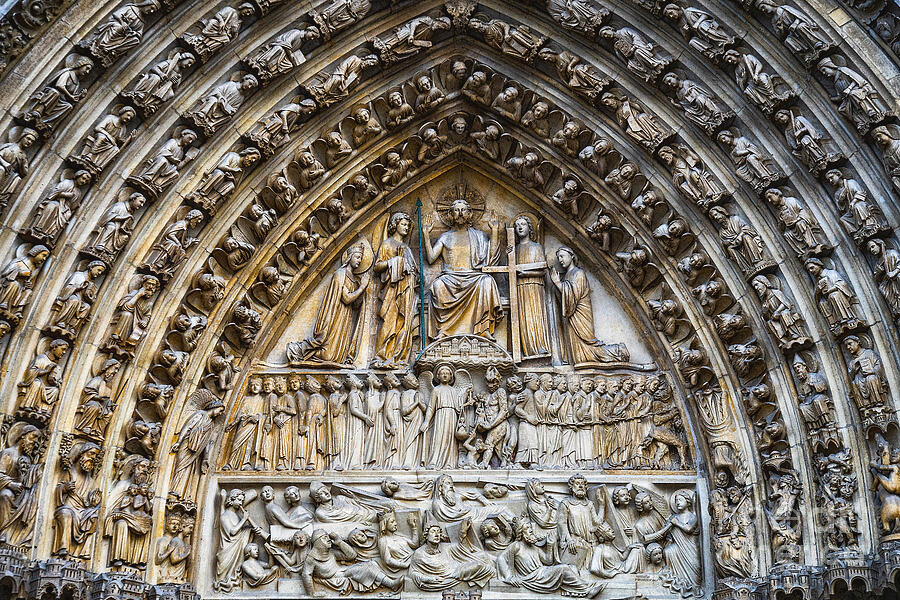
While in the grandiose soviet buildings everything is orderly and symmetric (see the Palace of Culture and Science in Warsaw), the great Cathedrals—like Bach’s variations—mix symmetry with exploration, dynamism, emotion, and fractality—especially in the details (exactly where the devil is said to lie). Rome fell, ancient egypt fell, the soviet union fell, and most religions fell too. The beautiful kept maintenance, and so we still have the egyptian pyrammids and the colosseum, but we have a lot more churches and mosques—because they are more beautiful, closer to the truth, and converge to similar ideas. The largest families tend to come from more beautiful women, and larger and longer lasting lineages arise as a result (Jokela, 2009), but the highest predictor of a large and long-lasting family is religious affiliation.
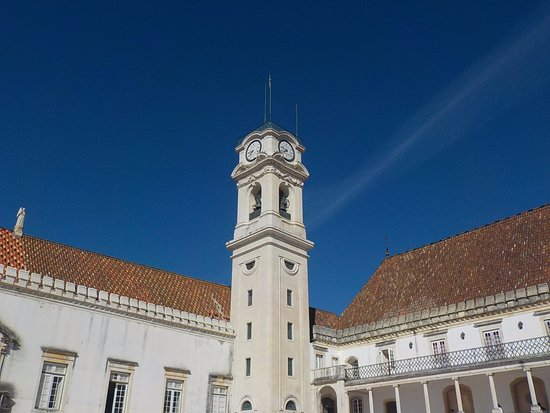
“It is only as an aesthetic phenomenon that existence and the world are eternally justified.” Nietzsche
Grandiose things do last, sure. But not that long. The whole of the Soviet Union collapsed, and it was grandiose enough to be a part in defeating Hitler. Nazi germany collapsed, the Roman Empire, ancient Greece, the Portuguese and Spanish empires of the 15th and 16th centuries, along with their inquisitions died off.
The longest lasting empires in existence are the religious ones. From it, emerged and prevailed the greatest pieces of art and science in history (e.g. the Sistine Chapel, Darwin’s Theory of Evolution). But it might also be that such empires prevailed due to these great representations.
There is a pure element to the beauty represented in the best pieces of art. The Goldberg Variations, for example, start off sounding like a soothing lullaby. The music puts the listener in a trance-like tingling state, akin to what you feel as a child playing. This feeling is a deep appeal to the brain’s fundamental motivation system (see Panksepp — Affective Neuroscience).
Beauty, then, has a puritan or infantile aspect to it, at least in the same way that a child explores. Child-like because for a child everything is new; it’s exploration, except for its mother.
-
Music is Beautiful when it manages to draw a path away from “home” (from the base key) and then back again in exactly the right chaos-to-order proportion that the listener can bear. Great pieces like Bach’s Fugues not only start off with just a small step from home before moving more aggressively, but are also fractal in the sense that the higher layers of the song reveal themselves as the listener acquires the ability to take on more chaos.
-
Painting is the oldest form of art. It’s a freeform manifestation of imagination. Paintings are beautiful when they are fractal and detailed, but mainly when they carry meaning—just like the journey-to-and-fro-home in music. The paintings in the Sistine Chapel are exactly that: beautiful from afar, and from close up, at every scale. Every detail is though through—proportions, perspectives.
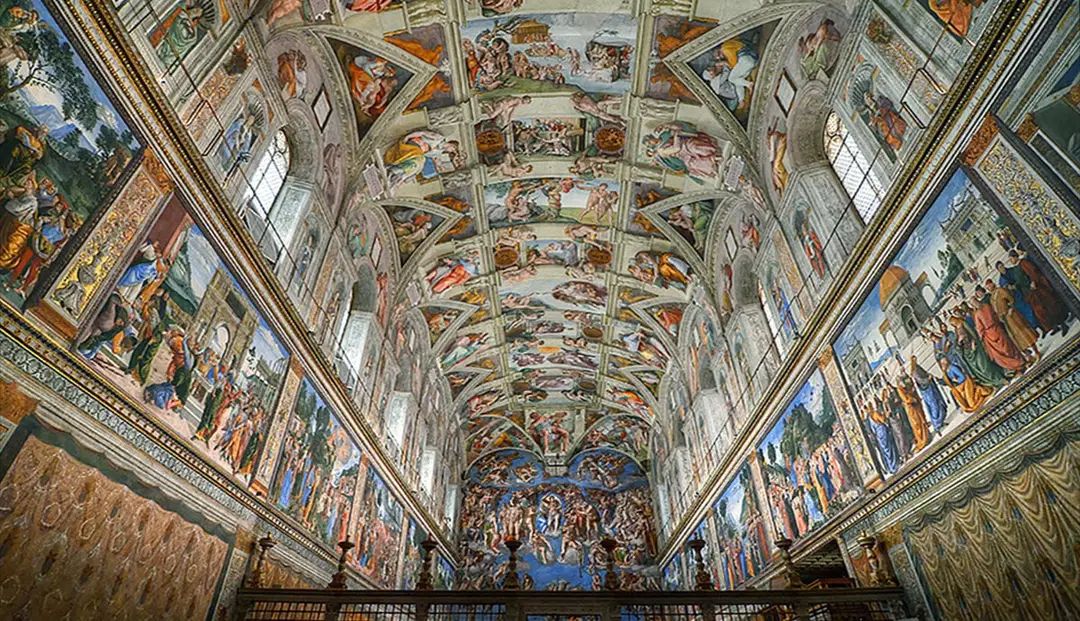
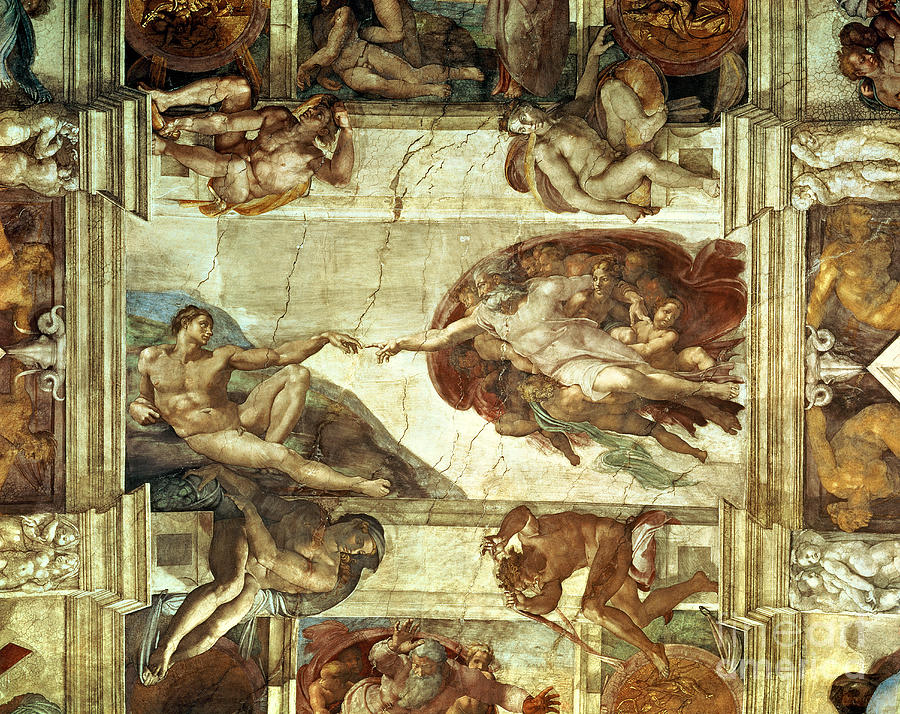
These pieces are what define the great people of the past. But so do great war strategists and entrepreneurs.
There has not been a truly great artist in a very long time—or at least there hasn’t been one as recognized as Michelangelo or Da Vinci. The cultural focus has shifted from art—or at least from that form of it. But so has it shifted from great wars.
The human colective does not seem to be willing to fight for, portray, or develop deep ideas anymore. We have become selfish and proud.
The main goal with political speech and action is to gain power. Art has been repurposed to serve ideologies—often also used as a means for gaining power (like the exemplified estado-novista style, or Hitler’s use of art to change his own culture, or the hyper-sexualized modern art serving the modern ideologies).
Engineering, then, is not an ethic. It is a power—an instrument that takes an intention and makes it concrete. That is why it so easily serves both the surgeon and the tyrant: the tool is indifferent, but the trajectory it enables is not. The moral question is therefore upstream of the artifact. It lives in the aims we choose, in the constraints we accept, and in the kind of people and institutions we build around our tools.
If there is a “Nietzschian” honesty in engineering, it is this: you cannot hide behind abstractions. Reality audits your beliefs. Bridges either stand or collapse; systems either work or fail. But if engineering is only the pursuit of capability, it eventually degenerates into mere domination—optimization without orientation. The alternative is not to make engineering “pure” (it cannot be), but to yoke it to higher-order commitments that are robust across time: craftsmanship, responsibility, reversibility, and a willingness to pay the costs of what we build.
Beauty and unification are not luxuries here; they are signals. They compress complexity into legible form, invite participation, and make maintenance worth doing. The works that endure—cathedrals, theories, languages, even well-made machines—are those whose structure is intelligible and whose details reward attention. When we engineer with an eye for harmony, we do more than decorate; we reduce entropy in the human world. We make systems that can be understood, trusted, repaired, and inherited.
So the path forward is less about inventing “value-laden” technology and more about cultivating value-laden engineers: people who can hold power without worshipping it, who can build quickly without building carelessly, and who can say no to capabilities that corrode the conditions for meaning. Aim engineering toward the Good by demanding accountability; toward Beauty by insisting on form that invites care; toward Unification by preferring systems that reconcile rather than fragment; toward Intelligibility by honoring clarity over cleverness.
In the end, engineering upward is simply engineering with a conscience. Capability in service of what deserves to last.